

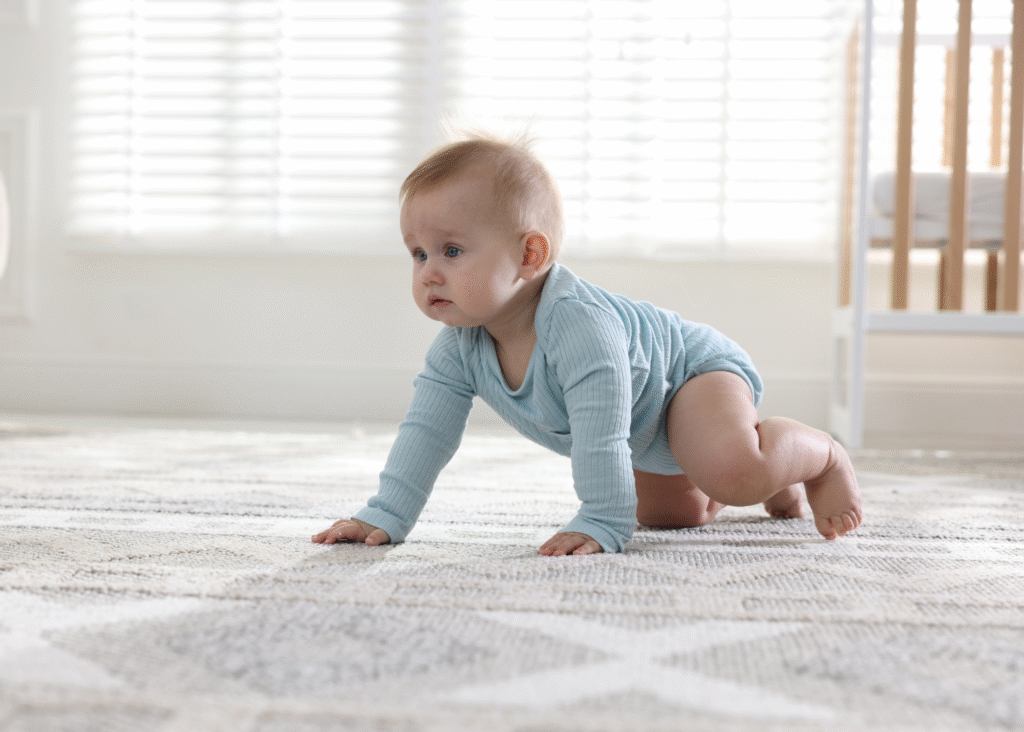
At Colonia Pediatrics, serving families in Avenel, NJ and Metuchen, NJ, we know how exciting – and sometimes nerve-wracking – it is when your child reaches new developmental milestones. One of the first major milestones is crawling. But many parents wonder: when do babies start crawling, what age should babies crawl, or how will I know when my baby is ready?
In this blog post, we’ll walk through typical timelines, variations, signs of readiness, how to encourage crawling, and when to reach out to your pediatrician.
Crawling is one of the earliest forms of independent mobility for infants — it’s when babies move on their own, using hands and legs (or alternative methods), exploring their surroundings rather than relying on being carried.
That said, crawling doesn’t look the same for all babies. Some babies “classic crawl” on hands and knees; others may belly-crawl (commando crawl), scoot on their bottoms, or even skip crawling and move directly to pulling-up, standing, or walking.
Because of this variety, crawling is better thought of as a “range-based milestone,” not a rigid deadline.
According to child development research and pediatric sources:
An often-cited developmental pattern is: sitting / trunk control → crawling → pulling up / cruising → walking.
Before actual crawling, babies usually show a sequence of preparatory skills as their muscles and coordination develop. Some of these include:
These signs reflect growing strength in the neck, trunk, arms, and legs – all essential for true crawling.
Babies may adopt different “crawling styles,” or even skip classic crawling entirely. Some common variations include:
All of these are valid – what matters most is independent mobility and gradual progression toward standing / walking.
Yes – many healthy infants simply follow a different timeline. According to child development experts, babies not crawling by 8–9 months (or even older) may still be within normal range.
Some infants may skip crawling entirely and go directly to pulling up, cruising (holding onto furniture), and then walking. That’s often OK – as long as other motor skills (sitting, rolling, trunk control) are progressing.
However, if by 12 months your child shows little or no independent mobility and other milestones (sitting, rolling, balance) seem delayed, it’s a good idea to consult a physician or pediatrician to rule out neuromotor or developmental concerns.
As your baby’s trusted Pediatrician in Avenel, NJ (and also serving families in nearby Metuchen, NJ), we recommend the following gentle and developmentally supportive ways to encourage crawling:
If you are concerned about your baby’s mobility – for instance: delayed rolling or sitting, lack of interest in moving toward toys, asymmetry in limb use, stiffness, or no sign of crawling or alternative mobility by 12 months – it’s wise to speak with a professional.
At Colonia Pediatrics (serving Avenel, NJ and Metuchen, NJ) we’re here to support your baby’s development. We can assess gross motor development, observe muscle tone and coordination, recommend physical therapy if needed, and provide guidance to help your child progress safely and confidently.
If you’re a parent in Avenel, NJ or Metuchen, NJ looking for reliable guidance on your baby’s growth and developmental milestones, Colonia Pediatrics is here for you. We’re committed to helping your child reach their milestones in a safe, supportive, and healthy way.


