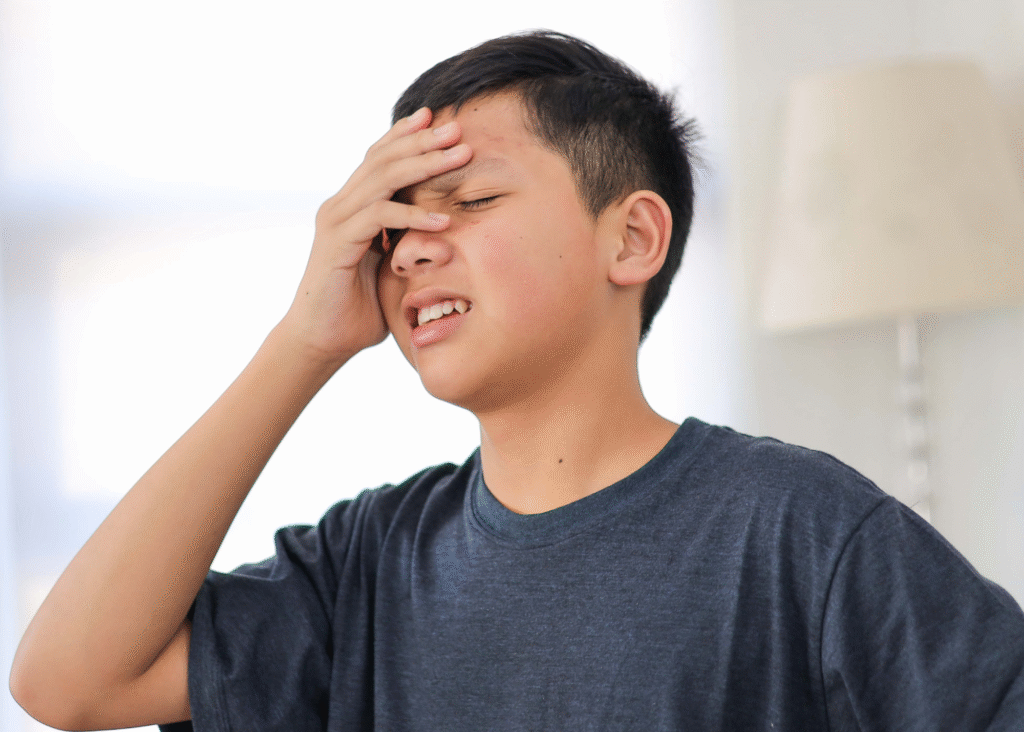
Concussions are a common but often misunderstood type of brain injury, especially in children and teens. Because symptoms aren’t always visible right away, many parents may underestimate the seriousness of a concussion. At Colonia Pediatrics in Edison, NJ, we want parents to feel confident recognizing concussion symptoms and knowing when to seek medical care.
A concussion is not just a “bump on the head.” Even mild injuries can disrupt normal brain function and require proper medical attention-particularly in young, developing brains.
What Is a Concussion
A concussion occurs when a bump, blow, or jolt to the head-or even a strong hit to the body-causes the brain to move rapidly inside the skull. This sudden movement can temporarily affect how the brain works.
Importantly, a child does not need to lose consciousness to have a concussion. In many cases, symptoms develop hours or even days after the injury, making it essential for parents to continue monitoring their child closely after any head impact.
Common Concussion Symptoms in Children
Concussion symptoms can vary from child to child and may affect thinking, physical health, emotions, and sleep.
Symptoms Reported by Children and Teens
- Difficulty concentrating or remembering things
- Feeling “foggy” or mentally slow
- Headache or head pressure
- Dizziness or balance problems
- Sensitivity to light or noise
- Fatigue or low energy
- Changes in sleep patterns, including excessive drowsiness
- Irritability, sadness, nervousness, or mood changes
Signs Parents May Observe
- Appearing dazed or stunned
- Confusion about events or surroundings
- Answering questions slowly or repeating questions
- Forgetting school schedules or assignments
- Behavior or personality changes
- Memory loss before or after the injury
- Brief loss of consciousness
Urgent Symptoms – When to Go to the ER
Seek immediate emergency care if your child experiences any of the following:
- Unequal pupil size
- Worsening or severe headache
- Repeated vomiting
- Slurred speech or seizures
- Weakness, numbness, or poor coordination
- Increased confusion or unusual behavior
- Difficulty recognizing people
- Loss of consciousness, even briefly
What to Do If Your Child Has a Concussion
If you suspect your child has a concussion, schedule a medical evaluation as soon as possible. A pediatrician in Edison or concussion specialist can assess the injury and guide the recovery process.
Rest is critical during recovery. Both physical and mental activities-such as sports, exercise, studying, reading, and screen time-can worsen symptoms if resumed too soon. Your child may need:
- Reduced physical activity
- Limited screen exposure
- Shortened school days
- Extra time for homework or tests
Following a structured recovery plan helps reduce the risk of prolonged symptoms or repeat injury
Returning to School After a Concussion
School is often one of the biggest challenges during concussion recovery. Inform teachers, school nurses, counselors, and coaches about your child’s diagnosis. Temporary academic adjustments may include:
- Rest breaks during the day
- Reduced reading or screen time
- Modified assignments
- Shortened school hours
These accommodations support healing while minimizing stress on the brain
How Colonia Pediatrics Can Help
At Colonia Pediatrics in Edison, NJ, we provide compassionate, evidence-based care for children recovering from concussions. We help families understand symptoms, monitor recovery, and safely guide children back to school, sports, and daily activities.
If your child has experienced a head injury or is showing concussion symptoms, our team is here to help every step of the way.