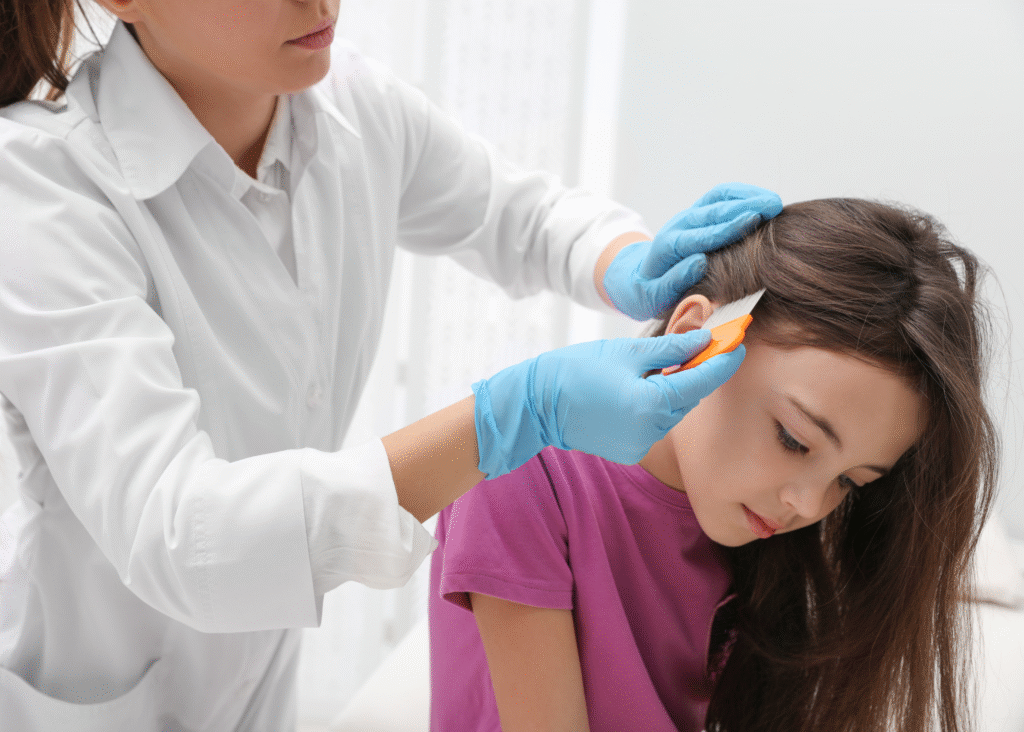
Head lice are a common concern for parents, especially when children are in school or daycare. While discovering lice can be stressful, it’s important to know that lice are not dangerous, do not spread disease, and are not related to poor hygiene.
At Colonia Pediatrics in Edison, NJ, we regularly help families identify lice early, treat them effectively, and prevent reinfestation. With the right approach, lice can be managed safely and successfully.
What Are Head Lice?
Head lice are tiny gray insects, about the size of a sesame seed, that live on the scalp and feed on small amounts of blood. They are often difficult to see, but their eggs-called nits-are more noticeable. Nits appear as small white or yellowish dots firmly attached to the hair shaft near the scalp and do not flake off like dandruff
The most common symptom of lice is itching of the scalp, though some children may have lice without noticeable discomfort. Importantly, lice do not make children sick or cause long-term health problems.
Understanding the Lice Life Cycle
Knowing how lice grow helps explain why proper treatment and cleaning are essential.
- Nits (eggs) hatch into lice within about 7 days
- Nits can survive off the scalp temporarily
- Adult lice live on the scalp for up to three weeks
- Lice cannot survive more than one day without a blood source
Because of this life cycle, treatment often needs to be repeated to eliminate newly hatched lice and prevent reinfestation
How Do Lice Spread?
Only live lice are contagious. They are most commonly spread through prolonged head-to-head contact, which is why outbreaks are common among children.
Common situations where lice spread include:
- Sleepovers
- Bed-sharing
- Close play at home
Indirect spread through shared items such as hats, hairbrushes, or helmets is possible but less common. Most lice transmission happens at home, not in schools
How to Treat Head Lice Effectively
Over-the-counter anti-lice shampoos, such as permethrin (e.g., Nix), are commonly used and effective when directions are followed carefully.
Step-by-Step Lice Treatment
- Wash hair with regular shampoo only (do not use conditioner)
- Towel-dry hair
- Apply approximately 2 ounces of anti-lice shampoo to damp hair
- Massage thoroughly into the scalp and hair roots
- Leave on for 10 minutes
- Rinse and towel-dry (do not use conditioner)
- Do not shampoo again for 48 hours
- Repeat treatment in 9 days to kill any surviving nits
If over-the-counter treatments are not effective, prescription options are available. Always consult your pediatrician in Edison before repeating or changing treatments.
Preventing the Spread of Lice at Home
Treating the child is only one part of lice management. Home cleaning is essential to prevent reinfestation.
Home Prevention Tips
- Vacuum your child’s bedroom and common areas
- Wash bedding and clothing worn in the past 3 days in hot water (at least 130°F)
- Soak hairbrushes and combs for 1 hour in an anti-lice shampoo solution
- Seal non-washable items in plastic bags for 2 weeks
- Avoid sharing combs, brushes, hats, or hair accessories among family members
When Can My Child Return to School or Daycare?
Children can return to school or daycare after treatment. Nits alone are not contagious, and keeping children home unnecessarily does not prevent the spread of lice. This approach helps reduce stigma and supports a quick return to normal routines
How Colonia Pediatrics Can Help
At Colonia Pediatrics in Edison, NJ, we understand how overwhelming lice can feel for families. Our team can:
- Confirm whether lice are present
- Recommend the most effective treatments
- Prescribe medication if needed
- Answer questions about prevention and school policies
If you are unsure about treatment steps or lice keep returning, we encourage you to contact our office.