

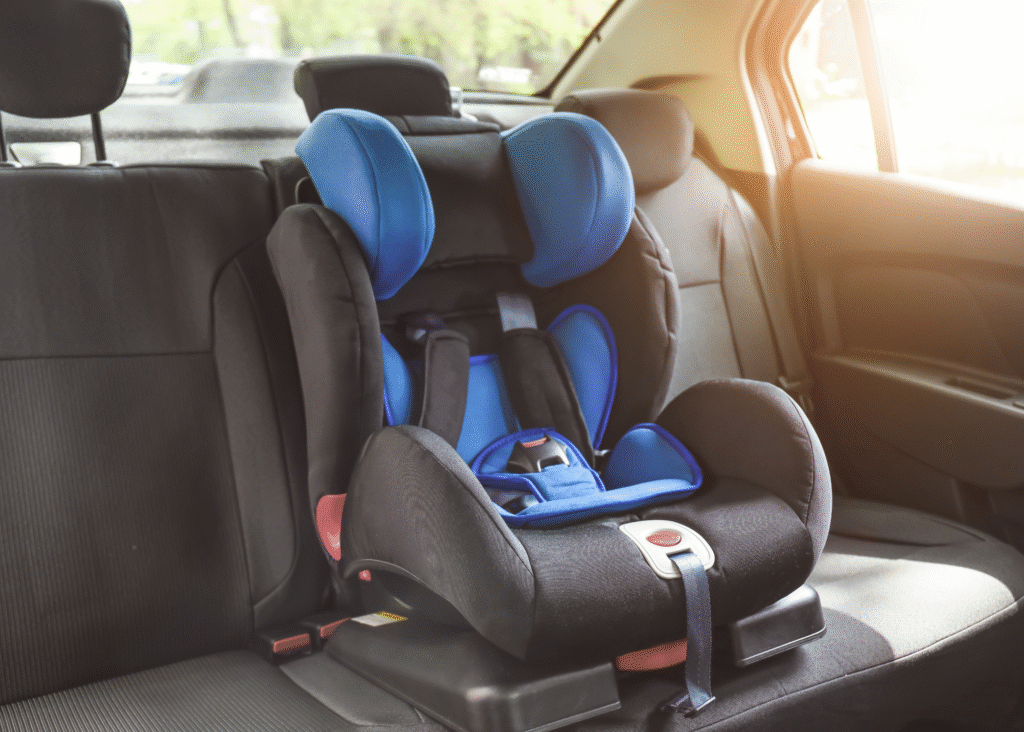
Keeping your child safe in the car is one of the most important responsibilities of parenthood. While your child may seem ready to move on to the next stage, safety experts agree that using the correct car seat for your child’s age, height, and weight significantly reduces the risk of injury in an accident.
At Colonia Pediatrics in Edison, NJ, we regularly guide families on proper car seat use to help protect children at every stage of growth. Understanding when-and how-to transition between car seats can make a life-saving difference.
Motor vehicle accidents remain a leading cause of injury in children. Properly installed and age-appropriate car seats reduce the risk of serious injury by providing essential head, neck, and spinal support.
Even if your child appears “grown up,” they may not yet be physically ready to ride without a safety seat. Each transition should be based on safety guidelines—not convenience or appearance
A rear-facing car seat is the safest option for infants and young babies. Infant, convertible, and 3-in-1 car seats are all appropriate as long as they meet manufacturer height and weight limits.
Infant seats are typically used until about one year of age, but many babies outgrow them sooner based on size. Convertible and 3-in-1 seats offer extended rear-facing options and can be used for several years.
Key safety tip: Always follow the manufacturer’s height and weight recommendations to ensure proper protection
Keeping your child rear-facing for as long as possible-often up to 35-50 pounds in many convertible seats-is up to five times safer in a crash.
Although a tall toddler may look uncomfortable, children adapt well to rear-facing positions. This orientation provides crucial protection for the head, neck, and spine during sudden stops or collisions.
Transition to front-facing only after your child reaches the maximum height or weight limit of their rear-facing seat.
By school age, many children can ride in a front-facing seat. However, it is important to continue using a five-point harness until your child outgrows the seat’s height and weight limits.
Convertible, combination, and 3-in-1 seats are designed to accommodate growing children during this stage and still provide optimal protection when properly installed.
Even if your child seems more mature, they are often not ready to ride without a booster seat. Booster seats use your car’s seat belt to position it correctly across your child’s body.
A booster seat—either with or without a back—helps ensure:
Your child can sit upright without slouching or fidgeting
Child-Car-Seat-Safety-1
There is no need to rush this transition. Proper belt positioning is critical for safety.
Although the back seat remains the safest place for children and teens, those aged 13 and older are legally allowed to sit in the front passenger seat. Even so, parents are encouraged to keep children in the back seat whenever possible for added protection.
At Colonia Pediatrics in Edison, NJ, we are committed to helping families make informed decisions about child safety. During well-child visits, our Pediatrician in Edison can answer questions about car seat transitions and ensure your child’s safety aligns with current pediatric recommendations.
As long as possible, until they reach the maximum height or weight allowed by their car seat.
Yes. Booster seats ensure proper seat belt positioning and significantly reduce injury risk.
When they can sit properly with their back against the seat, knees bent naturally, and the seat belt positioned correctly.
While laws vary, it is safest to keep children in the back seat until at least age 13.
As long as possible, until they reach the maximum height or weight allowed by their car seat.
Yes. Booster seats ensure proper seat belt positioning and significantly reduce injury risk.
When they can sit properly with their back against the seat, knees bent naturally, and the seat belt positioned correctly.
While laws vary, it is safest to keep children in the back seat until at least age 13.